
5. Blockchain Ecosystem Infrastructure
Decentralized Data Oracles
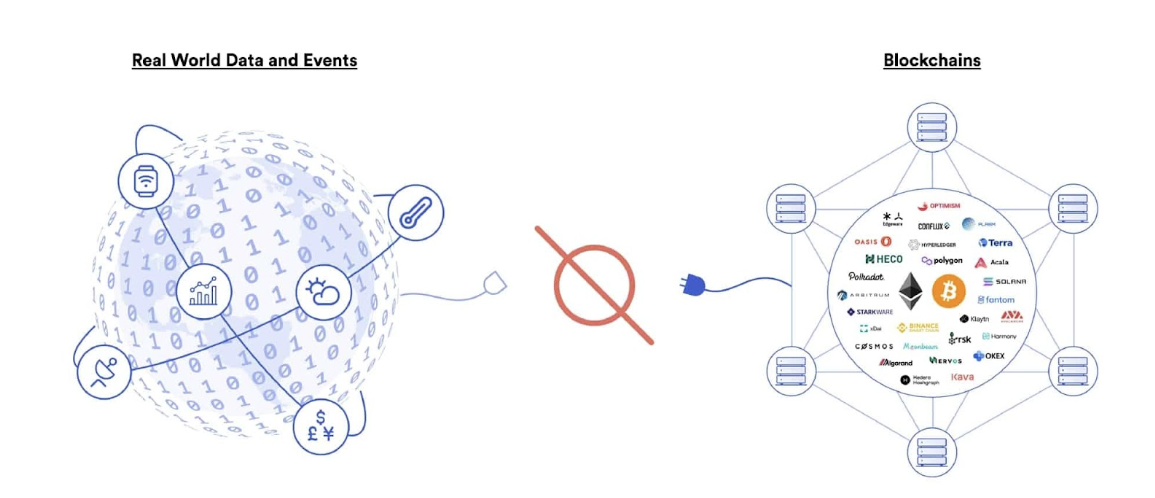
In the case of the NYSE, the Consolidated Tape Association (CTA) acts as a data oracle, which is a data provider that can bring real-time information to a platform. In the case of blockchain, an oracle is crucial for bringing in external data, since the blockchain network is not directly connected to the Internet. This system lets smart contracts execute their commands based on internal and external inputs such as cryptocurrency prices, financial markets, sports results, or any other external piece of data that exists online.
Source: Chainlink
Blockchain oracles are different from traditional ones because they are decentralized- instead of relying solely on one company to act as a data provider (like the NYSE relies on the CTA), they effectively take in multiple data points from a Decentralized Oracle Network (DON) to ensure that data is correct.
This removes trust from the equation - if you only have one company providing all of your data then you have to trust them that this data is correct, whereas if you have a whole network of data providers and they all say the same thing, then you can be far more certain that the data is correct.
💡 Bringing cryptocurrency price data on-chain
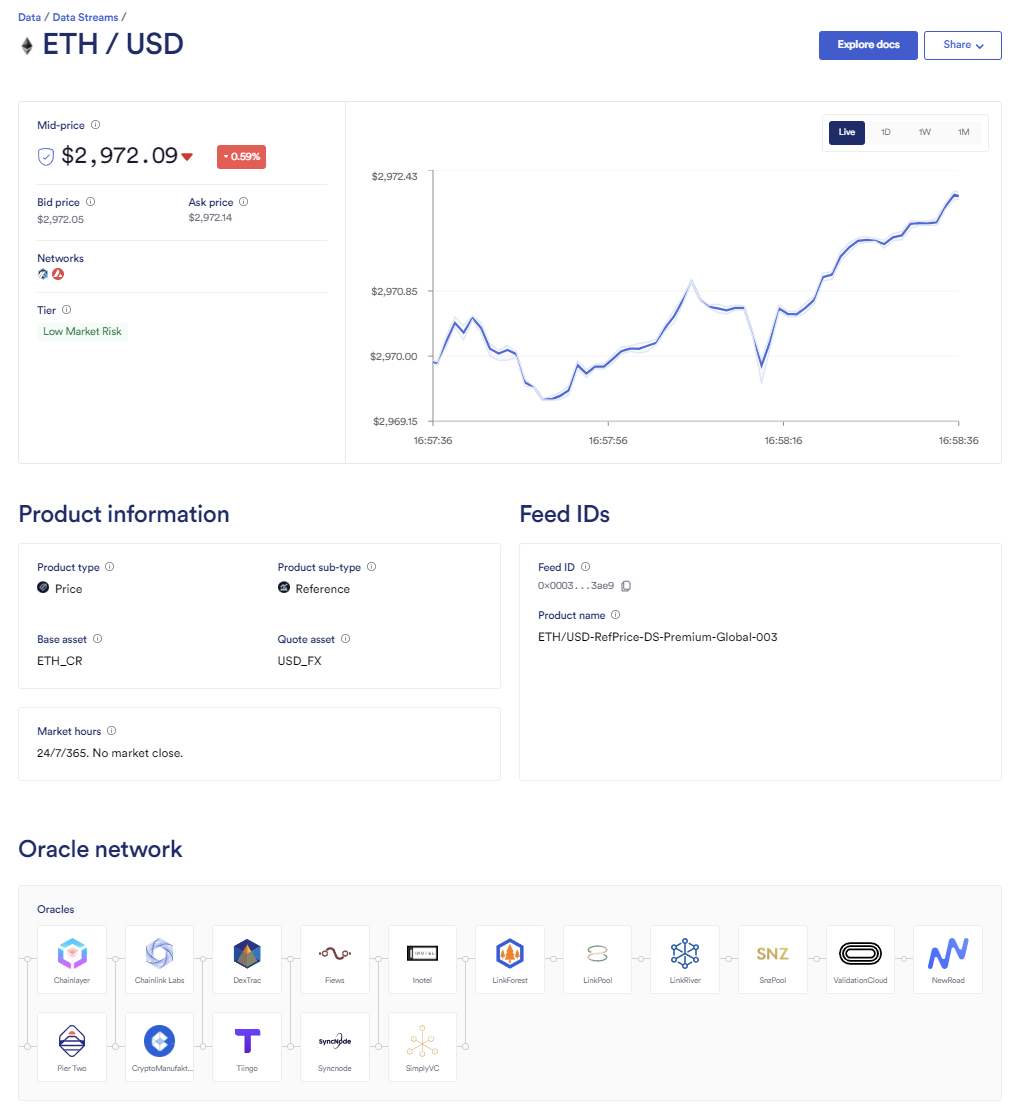
This image is an example of ETH price data being provided by Chainlink, one of the largest projects in the blockchain oracle space. At the bottom of the image, there’s a section titled ‘Oracle Network’. This network is the DON responsible for providing real-time price data of ETH.
Here’s how it works:
- Each node within the DON provides their real-time price of ETH
- Chainlink compares all of the ETH prices provided by these nodes and picks the price point the most nodes support - if 9 nodes say the price is $2,900 and 1 node says the price is $2,905 then the price point supported by the most nodes is chosen ($2,900)
- That price is then reflected as the officially verified price of ETH and sent out to all the applications using Chainlink for price data
- dApps that utilize Chainlink’s price data reflect this price as the current price of ETH
Currently, Chainlink is one of the largest contributors to the blockchain oracle ecosystem, handling a vast majority of external data inputs into the blockchain world. Chainlink acts as the bridge between the Internet and blockchain networks, where data can flow in and out of a blockchain network using Chainlink. To bring external data on-chain, it is taken from the Internet, filtered for accuracy through Chainlink’s DON, and then provided to the blockchain network.
Aside from pricing data for cryptocurrencies, blockchain oracles can bring a whole suite of data on-chain. For example, if you decide to build out a sports betting dApp, you could utilize a blockchain oracle to provide the outcome of sporting events. A smart contract could take in funds and escrow them until the event is over, at which point the oracle will provide the results of the event and the smart contract would automatically release the payout to the winner.
A more business oriented example would be using oracles to connect to the Internet of Things (IoT) for the purpose of tracking goods throughout a supply chain. Sensors attached to a shipment could provide real-time data such as location, temperature, and condition of goods that can all be added to a blockchain ledger to act as immutable proof.
To learn more in-depth about how oracles work on the blockchain and their different use cases, check out this article on What is a Blockchain Oracle by Chainlink.
📋 Practice Question