
7. Real World Application of Blockchain
Data Storage
The secure and immutable nature of blockchain technology makes it an ideal storage medium for all types of digital data. The entire system is so secure that the whole concept of cryptocurrency relies on the fact that blockchain is so immutable - it’s impossible to edit the database to shift currency from one address to another without the whole network having to approve the move. This makes blockchain an ideal storage method for documents, records, and other digital data.
By storing data on the blockchain, it becomes much more resistant to fraud and manipulation because the original data can’t be edited or manipulated once it’s on-chain.
Blockchains offer an ideal environment for fraud-proofing on-chain data. As discussed with NFTs, each tokenized asset will have a unique identifier that can prove it is the original copy of a good. To verify that a piece of data is legitimate, all you’d have to do is check its on-chain ID and you’ll be able to see the full transaction history of that item. The associated data can be stored as metadata attached to that token, creating an effective system to verify that token’s origins and audit the entire transaction trail.
💡 AI-proofing media
With the rise of AI generated artwork, verifying digital media to be legitimate has become more of a necessity than ever before. As AI gets better at imitating people’s voices, deepfakes are becoming a major issue that can lead to significant harm.
Imagine if a video came out of a prominent political figure calling for war against another country only for everyone to learn that it was a deepfake once it’s too late. Blockchain can solve this issue by creating a public ledger that can be used to trace digital media to its publisher. In this situation for example, people would be able to go to the public address of that political figure and determine that it was not actually them that posted the video, but rather an anonymous user with no actual evidence of the politician making such a statement.
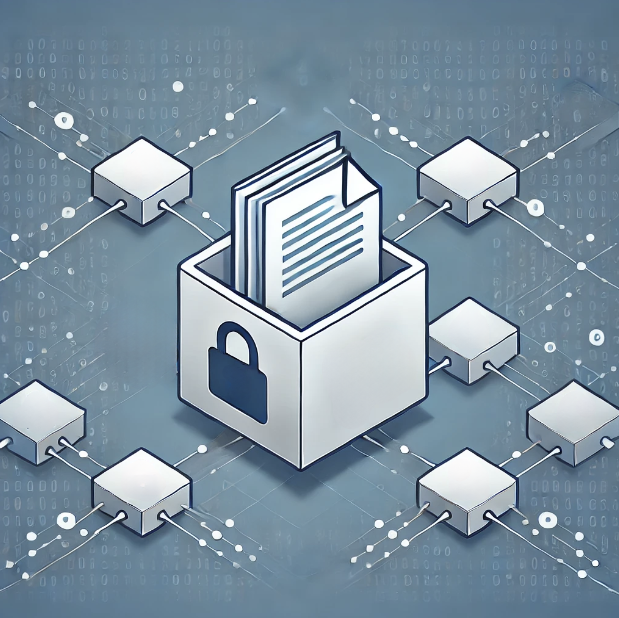
Source: ChatGPT
Blockchains also do not have to be public.
Businesses can utilize private blockchain networks that only allow access to vetted groups. As a node in this group, you’d get equal access to a private database that would be upkept by you and all the other nodes within the network. This would also remove the need for cryptocurrency, since it primarily acts as an incentive mechanism to make people contribute to the chain, and instead the chain would simply operate as a shared database.
These private blockchains can utilize consensus mechanisms such as the Practical Byzantine Fault Tolerance (PBFT) to operate without the need for cryptocurrency. This type of system reaches a consensus through multiple rounds of voting that can tolerate faults, such as a node either refusing to vote or acting maliciously. It does not require any token incentive to create new blocks, and offers security and a high throughput rate to handle a large load of transactions. This can let multiple businesses or other entities create a trusted network for exchanging information securely.
💡 On-chain medical records
Today, accessing and storing medical records is a hassle that requires tons of work. Whenever you switch doctors or healthcare providers, the process of going through and transferring all of your medical records can be long and arduous.
Now imagine if there was a private blockchain network that existed for containing these records, with each patient having their own digital address on-chain and all their medical information stored at that address. Hospitals, insurance companies, and general healthcare providers could request access to this blockchain to view your records whenever necessary, and transferring medicals records would become as easy as sending cryptocurrency from one address to another.
Public databases are generally not maintained as well as they need to be, leading to constant confusion when it comes to filing and retrieving public records.
Public databases can include data such as land ownership deeds, public works projects, or even local and state treasury allocation information, which should all be maintained in a secure environment and kept up to date. Using blockchain technology, public records can be displayed on-chain and moved around with ease. This will lead to less bureaucracy around these issues and a massive increase in efficiency.
💡 Into the Fileverse
Fileverse is a new application that emulates Google Docs but does so fully on-chain. Just like the traditional version, this app lets you create your own files that operate just like normal Docs but with the unique twist that all of these documents are stored fully on the blockchain. Each new file you create belongs to your digital address, making each document truly yours. You can collaborate on and share files, upload data onto the network in all different formats, and even directly embed links, images, and more into a doc.
With its peer-to-peer nature and advanced encryption, blockchain is the most advanced digital database structure that exists today. Both public and private blockchain networks offer a massive increase in efficiency while at the same time offering significantly reduced costs. As new apps continue to be developed to utilize blockchain as a data storage mechanism, its effectiveness and existing use cases will only continue to grow.
📋 Practice Question