
4. An Introduction to DeFi
Memecoins
Memecoins have become commonly associated with crypto traders today, where there are countless stories of traders making (but far more likely losing) tons of money by trading these tokens. Memecoins are primarily speculative crypto tokens that represent DeFi users taking advantage of an extremely volatile and unregulated market.
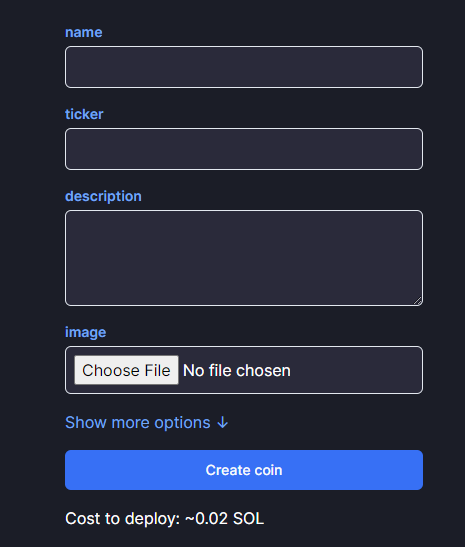
Source: Pump.Fun
Anyone can create their own token and publicly launch it within minutes, with thousands of new tokens being created on a monthly basis. Most undergo no safety checks and are designed to be quick pump-and-dumps, where a token briefly skyrockets in value before going straight to zero as the majority shareholders sell off their tokens.
Platforms such as Pump.fun, for example, make it so that anyone can launch a token in minutes. A user can add in a name, ticker, description, and an image, pay the fee (0.02 SOL is ~$3 as of June 2024), and their token will be deployed onto the Solana blockchain. Anyone can also write their own token deployment smart contract, with templates for these contracts being readily available on most DeFi chains.
While memecoins primarily serve a a speculative market, it’s important to note the underlying social movement that has made them so popular.
For the first time in the history of the Internet, users have the ability to create a monetary asset that reflects Internet culture.
Memecoins are called this way because that is what they reflect: memes. Memes are a whole new form of culture that has originated as a result of the Internet and have had tremendous impact on society. Certain memecoins have been so successful as a result of this culture, such as Doge, Shiba, and more recently Pepe.
Dogecoin is considered to be the first real memecoin. It was released in 2013 and based on the popular meme of a Shiba Inu dog that began gaining popularity in 2010. It was created as a way to tokenize an iconic symbol of the Internet and to give meme culture an additional utility route. The DOGE token gained immense popularity and Dogecoin is now the 9th largest blockchain by market cap with a value of over $16 billion as of June 2024. Shiba Inu and its token SHIB took inspiration from a similar influence, with the project also being based on the iconic dog breed. Since its launch in 2020, Shiba and its token SHIB has grown to be the 13th largest blockchain by market cap with a value of over $10 billion as of June 2024. One more iconic meme that made its way into the crypto market is Pepe, based on the Pepe frog meme, attaining a market cap of over $4 billion since its token PEPE launched in 2023.
Check out the Dogecoin, Shiba, and Pepe sites to learn more about these project and understand their missions.
Memecoins are driven through their communities, with their success often being dependent on how loyal of a community the project has. Successful memecoins were able to garner enough of a momentum from their supporters to become permanent players in the DeFi space because of their cultural relevance.
Memecoins often rise and fall in price corresponding to social events and narratives. Elon Musk’s relationship with Dogecoin, for example, has led to significant pumps for the token whenever he tweets about it. Celebrity endorsement of cryptocurrencies has been a significant topic of controversy, with most celebrities doing little to no research about a project before promoting it. Some even go as far as to launch their own tokens that often quickly plummet to zero once the majority stakeholders sell off their holdings.
While there are many risky facets of memecoins, it’s still important to recognize the impact of Internet culture and how important it is to shaping decentralized crypto markets. In a decentralized marketplace that has no controlling parties to dictate the market, trends arise directly from the users. While the crypto space does need a certain level of regulation to reach its peak potential, free markets cannot be undermined and subjugated. This is the true opportunity of crypto.
📋 Practice Question