
1. An Overview of Blockchain
What do you think of when you hear the word ‘Database’?
Most people envision a huge warehouse filled with massive servers controlled by a powerful company, because traditionally, only those types of entities that have enough money to build and maintain servers would be able to store data on a massive scale.
What if this doesn’t have to be the case? What if there was a way for an individual to contribute the storage and computing capacity of their personal device to a whole network of databases in exchange for compensation?
Welcome to the world of Decentralization.
Decentralization is a key principle of blockchain technology. Instead of storing data at one central location where it can be controlled by an individual person or company, data can instead be dispersed across a whole network where no one person can control it.
This means that with blockchain, no one has the power to stop you from owning or accessing your data because no entity can manipulate the database.
Think about how someone would interact with a traditional database. If they want to push information to a database or receive information from it, that person would create a transaction that would complete the task, and then that transaction would be logged in the database.
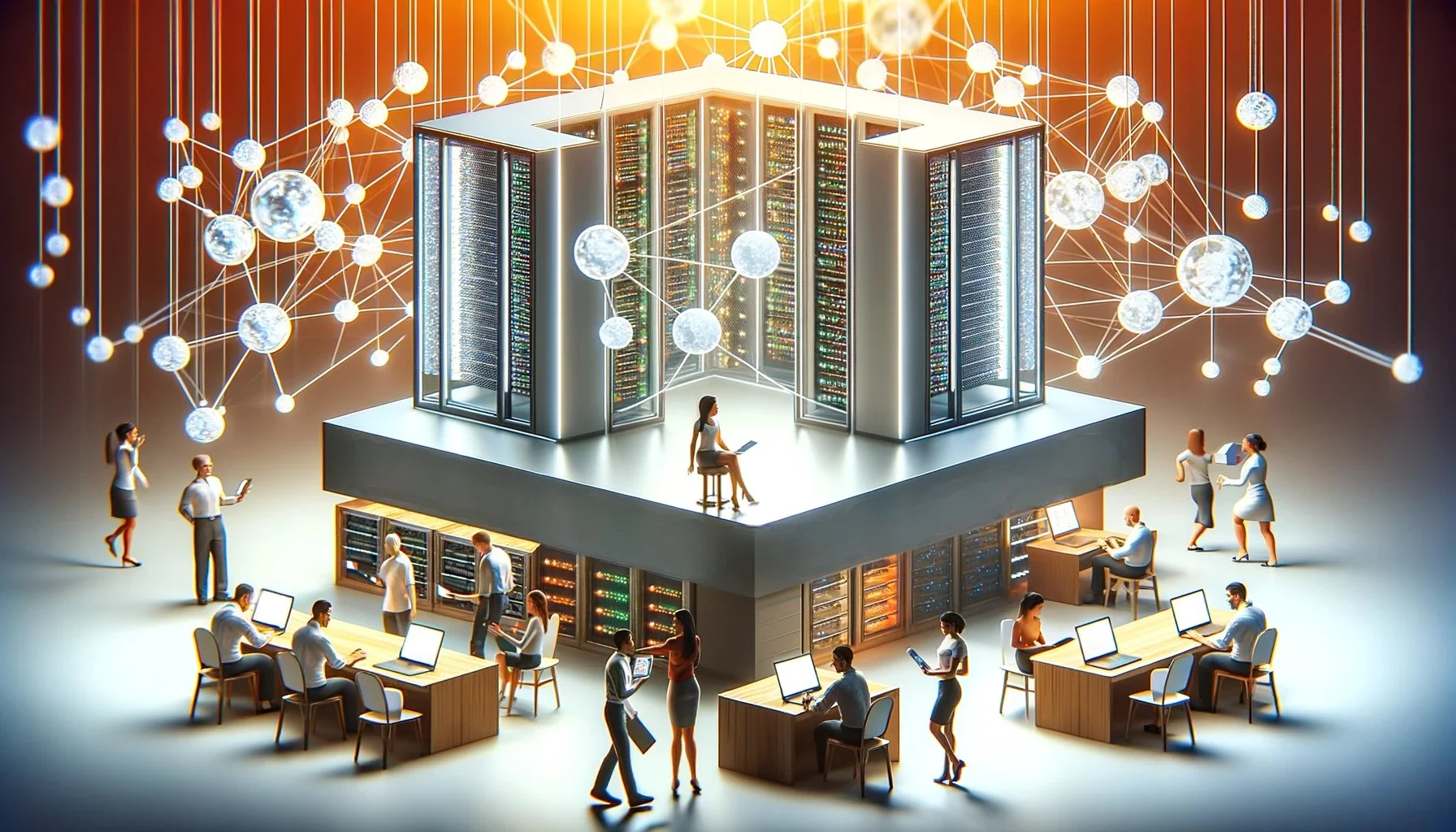
Source: ChatGPT
While this is simple and straightforward, it raises a concern: unless the user has direct access to the database, there is no way to prove that the transaction did or did not occur because no one but the database owner can access that list of transactions. This creates room for fraud, where an owner of the database (or a malicious actor such as a hacker) can go in and edit a transaction without anyone knowing.