
4. An Introduction to DeFi
NFTs
When most people hear the term NFT, they immediately think of a picture of a monkey selling for millions of dollars. While that has been a major use case for NFTs thus far, it is by far underselling the potential of this technology. NFT, or Non-Fungible Token, is a token just like any other cryptocurrency, except that it can’t be replicated - hence, non-fungible. Once an NFT is created, it is a unique one-of-one and can’t be copied.
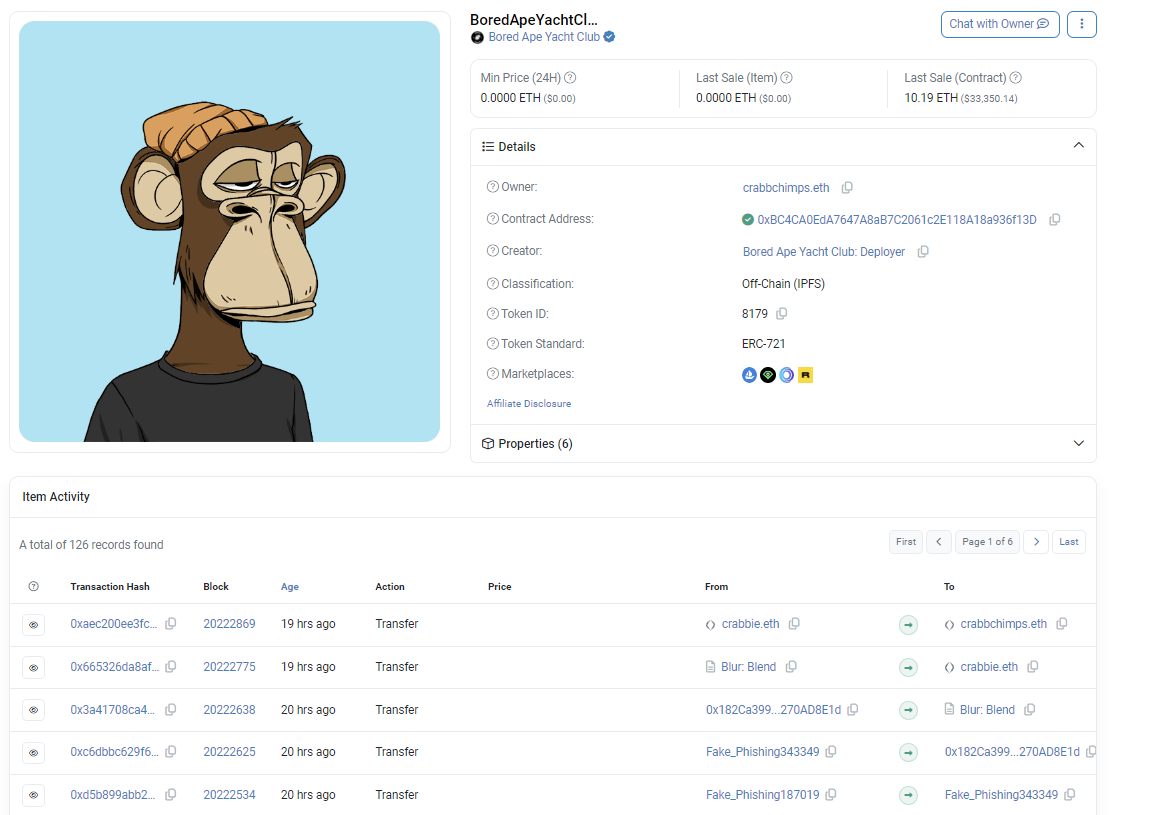
Source: Bored Ape (Etherscan)
This trait lets NFTs serve as truly unique identifiers of assets on the blockchain network. They are capable of storing metadata (data associated with the token) which lets them be programmable assets that can represent a wide range of objects. For example, with something like a Bored Ape NFT, the blockchain creates a token that contains all the information related to that NFT. This includes the identifier, name, image, and a list of all transactions associated with the NFT.
NFTs have the ability to demonstrate something that other digital assets can seldom do - proof of ownership. Since they are completely on-chain, you can track the entire ownership history of an NFT. This includes:
- The smart contract that was responsible for minting, or creating, the NFT
- All the transfers of ownership
- The on-chain address currently holding the NFT
While this may seem unnecessary for something like a monkey profile picture, it has real potential in other areas of digital assets.
Let’s say, for example, that instead of a picture of a monkey, an NFT represents a VIP concert ticket. The minting transaction would be the creation of that ticket by a smart contract, which would give it its unique traits and attach them as metadata to the token. This can be the ID of the ticket, the name of the event, a description of the perks the ticket offers, and a 3D animation that acts as the image that comes up when a user opens the NFT.
In this case, this concert ticket cannot be replicated because there is proof on-chain with its own unique ID that it is one of x amount of VIP tickets available. To verify the ticket is legitimate and is yours, all you’d need to do is show that based on the transaction history of the NFT that is visible on-chain, your wallet address is the one that currently holds the ticket.
This represents the use of NFTs for access, where owning the NFT acts as a membership or as a ticket to an event. Owners of the Bored Ape NFTs, for example, get exclusive access to events, sales, and more as a result of holding the NFT. To learn more about how NFTs can be used as digital tickets, check out this guide by Oveit.
The concert ticket example demonstrates another huge benefit of NFTs: the ease of ownership transfer.
Since there are no middlemen in blockchain, you can directly send an NFT to another address. That address will now own the NFT, and the transaction will be reflected in the transaction history of the NFT to prove the transfer of ownership occurred. In the case of a concert ticket, if you wanted to sell the ticket to your friend, you can have them send you crypto directly to your wallet address, and once you receive payment, you simply send them the NFT ticket.
For a more trustless and professional option, you can write a simple smart contract that holds the NFT until the requested amount of money is deposited into the contract, upon which the NFT is automatically released to the buyer and the crypto payment gets transferred directly to the seller.
How can NFTs represent physical assets?
NFTs offer the option of tokenization, which is the creation of a digital representation of a real world asset (RWA). Tokenization can onboard RWAs on-chain to create better and more fair organizational systems than the ones currently used. Today, ownership is tracked through a fairly inefficient and outdated system: vehicles, buildings, and land all have titles and deeds that represent ownership, with all these documents being stored in a variety of ways.
What if there was a one-stop digital solution that can modernize the issue of storing, tracking, and transferring ownership of physical assets?
This is the appeal of tokenization.
As with normal NFTs, NFTs that represent physical assets would have the ability to prove verifiable ownership of a physical good. The tokenized asset would be represented on-chain with a unique ID and held in the owner’s digital wallet. The blockchain would act as a decentralized public database that securely tracks the ownership of physical assets in a way that is much more efficient than having a messy and underkept bureaucratic database that can be breached and manipulated. It will also drastically increase the ease of transferring ownership, where official smart contracts can be created that automatically approve the transfer without any middlemen or brokers necessary.
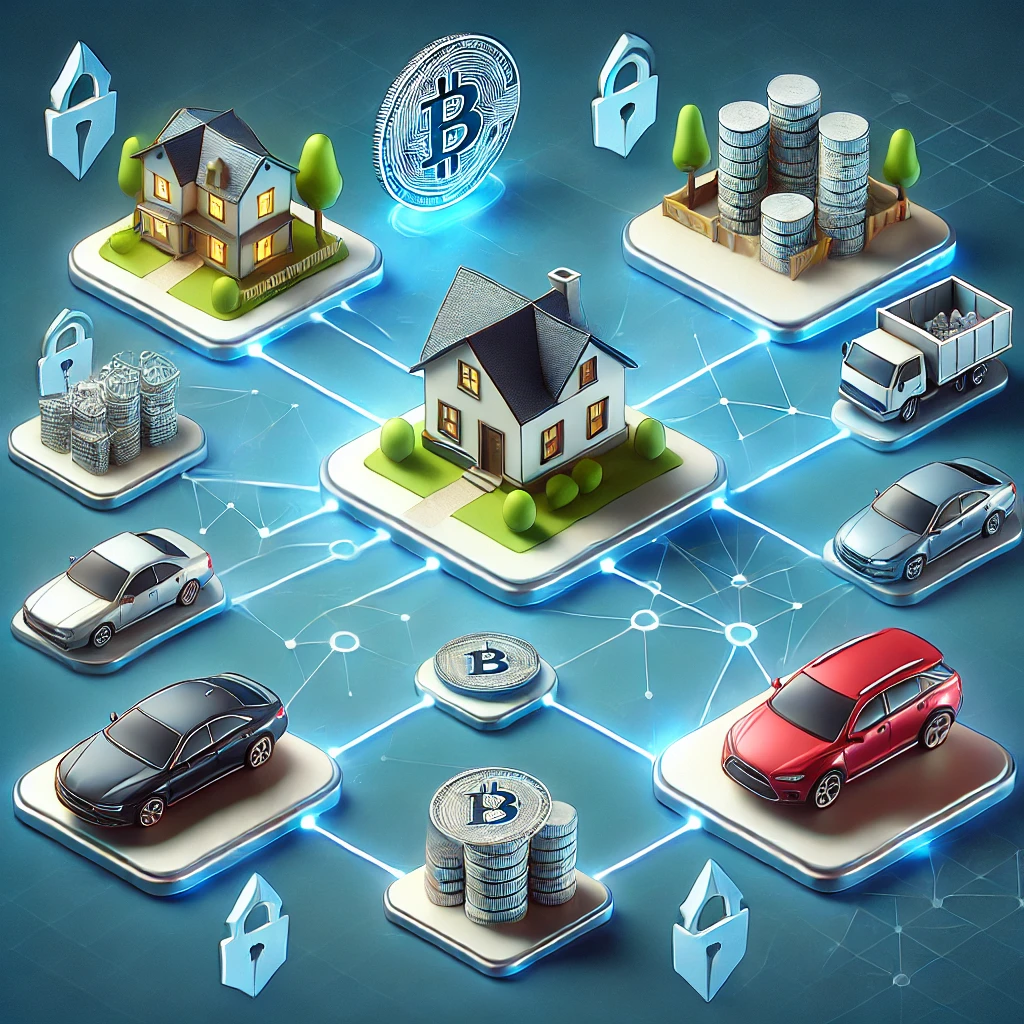
Source: ChatGPT
💡 Digitizing car titles on-chain
The California DMV recently announced a move to create a custom DMV-run blockchain network to digitize 42 million car titles. This network, built on the Avalanche blockchain, will give California residents a much smoother experience in transferring vehicle ownership. A custom wallet will allow drivers to access their car titles on-chain, giving them quick and easy access. Check out the full article by Avalanche to learn more about this initiative.
As mentioned when discussing stablecoins, NFTs can represent real-world fiat financial assets. Many stablecoins today that are backed by fiat currency or treasury bonds already apply this principle, where the value of a digital asset is tied to that of a financial one such as a treasury bond.
NFTs can also represent cryptocurrency value as well - for example, if you open a liquidity pool position on Uniswap, you receive an NFT that represents your open position and contains all the associated metadata such as the value of your investment and the assets in the pool. Once you close your position, that NFT is burned and removed from circulation.
NFTs have the capability to create a far more effective medium for ownership verification and storage of records than what we have today. While today’s use of NFTs as profile pics or artwork is already proving this concept works, the technology has far more potential that most people realize. With the tokenization movement sweeping DeFi, on-chain representation of real-world assets will create a far more effective and efficient system for keeping record of physical goods than any existing system does today.
📋 Practice Question